Athens
15 May 2025 · 4 minutes to read
The Acropolis of Athens is an ancient citadel on a rocky outcrop standing over the modern city. A single day took in the Odeon of Herodes Atticus on the slope below, the citadel on the summit and the Acropolis Museum at the foot of the hill. That last is an archaeological museum devoted entirely to the finds from the rock.
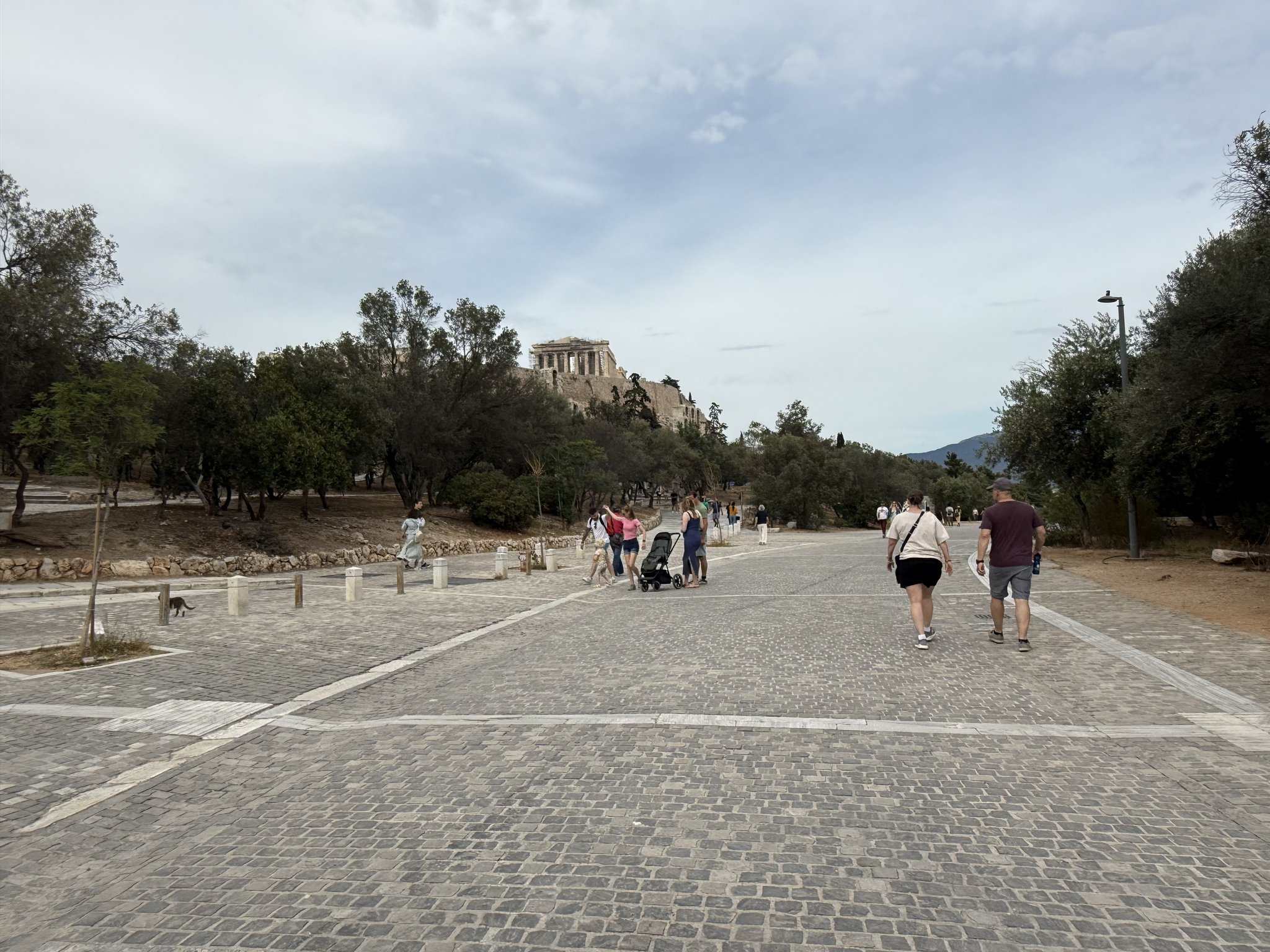
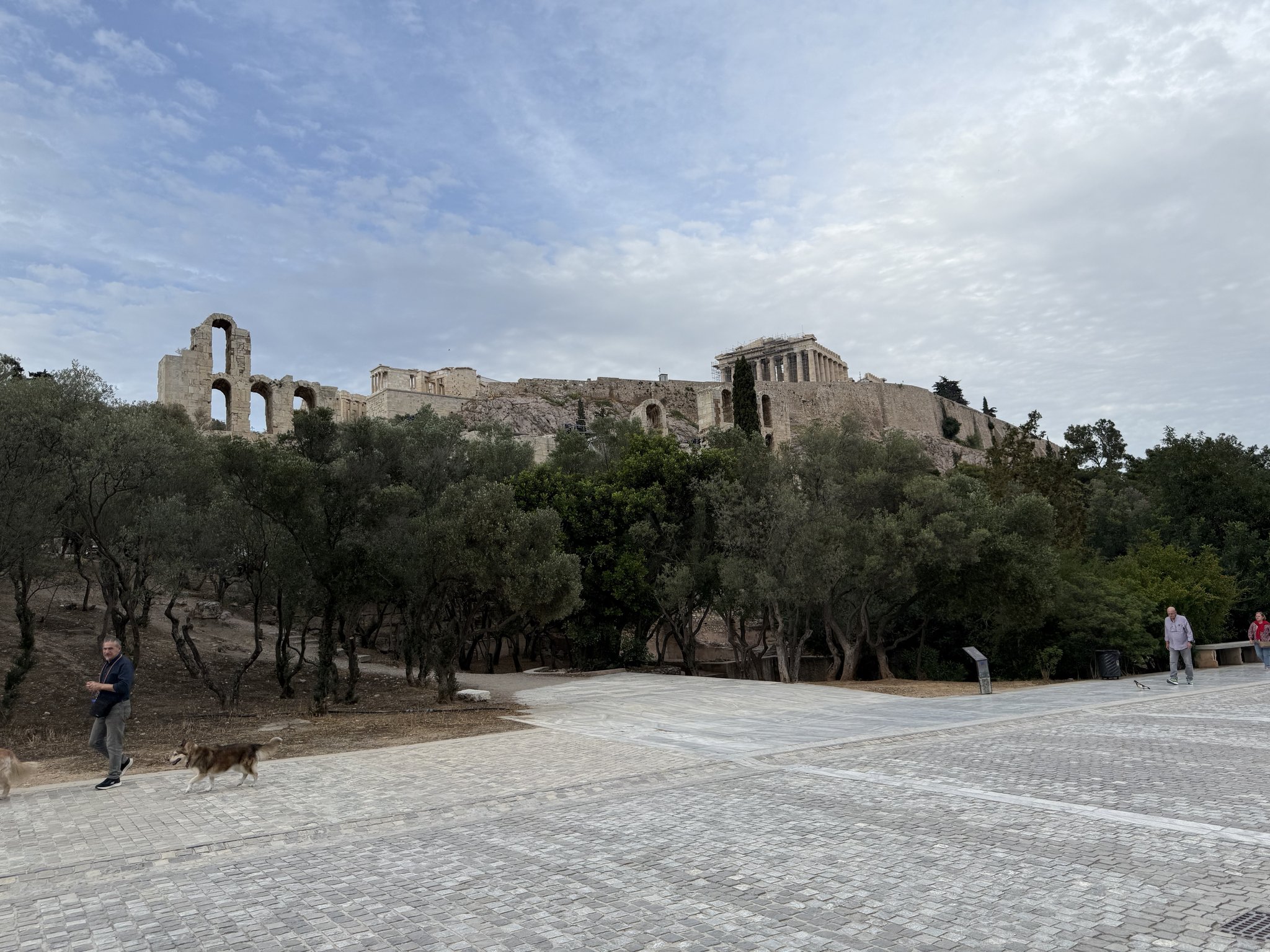
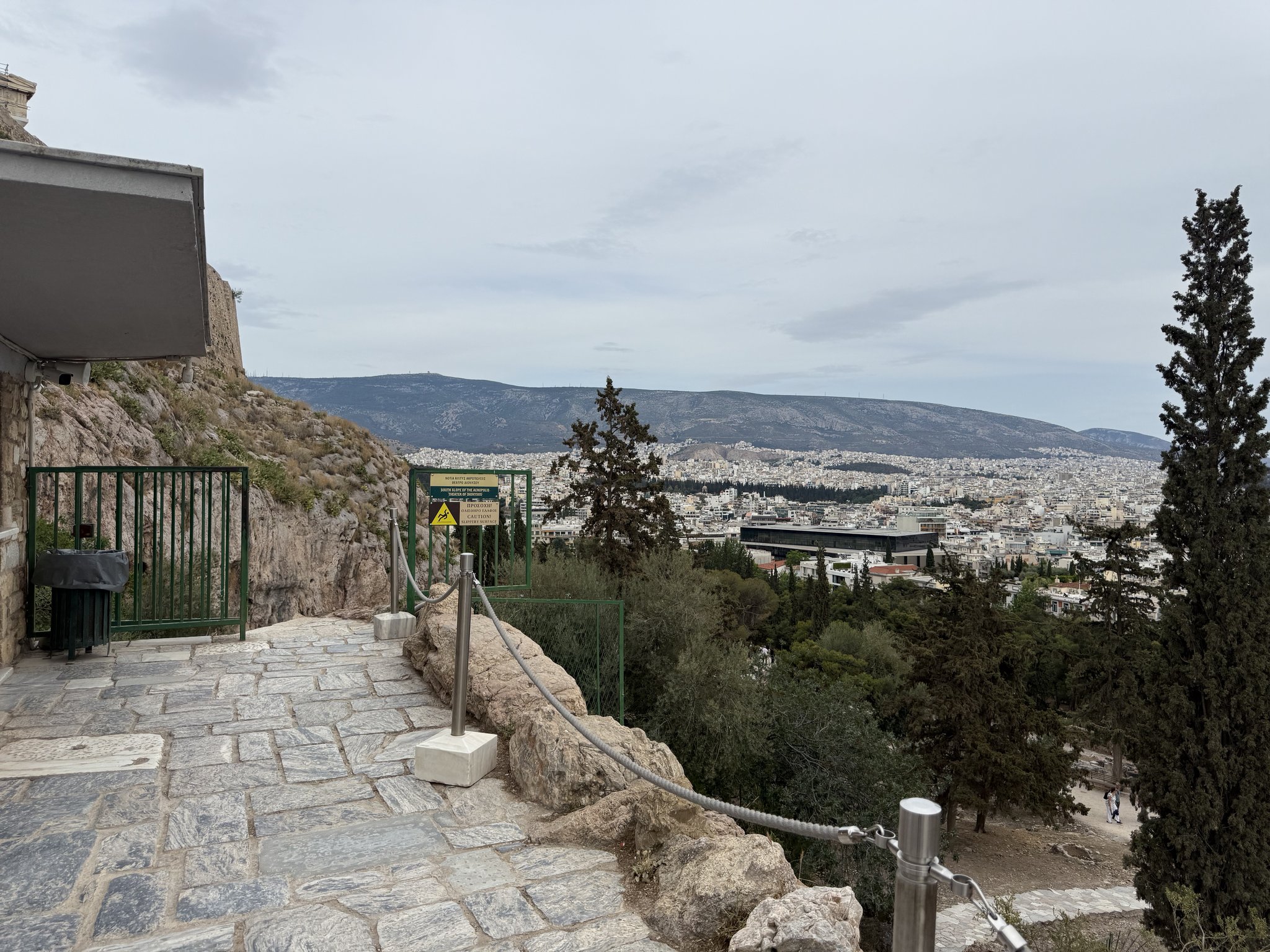
The way in runs along Dionysiou Areopagitou Street, under the south slope of the Acropolis.
Odeon of Herodes Atticus
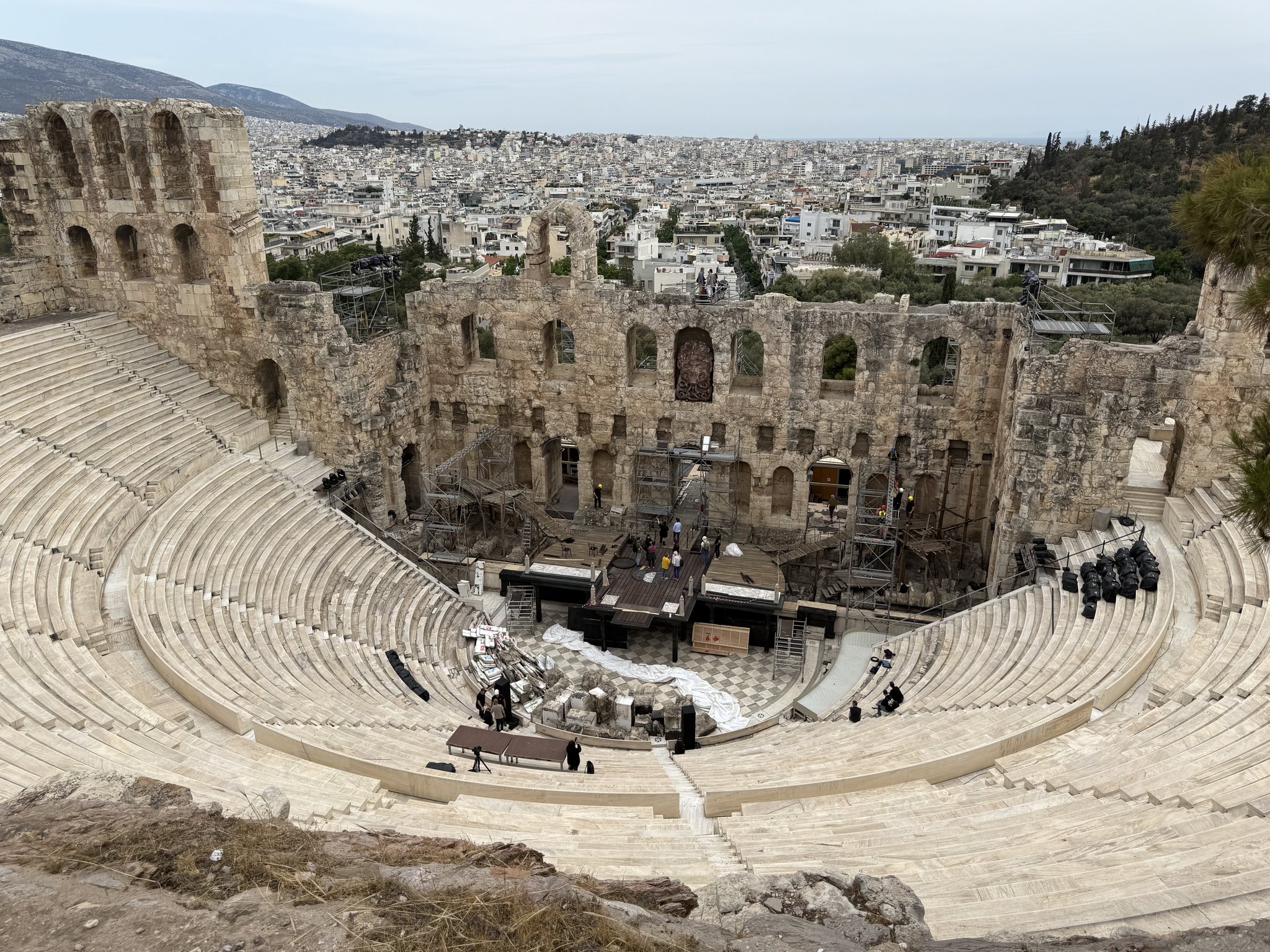
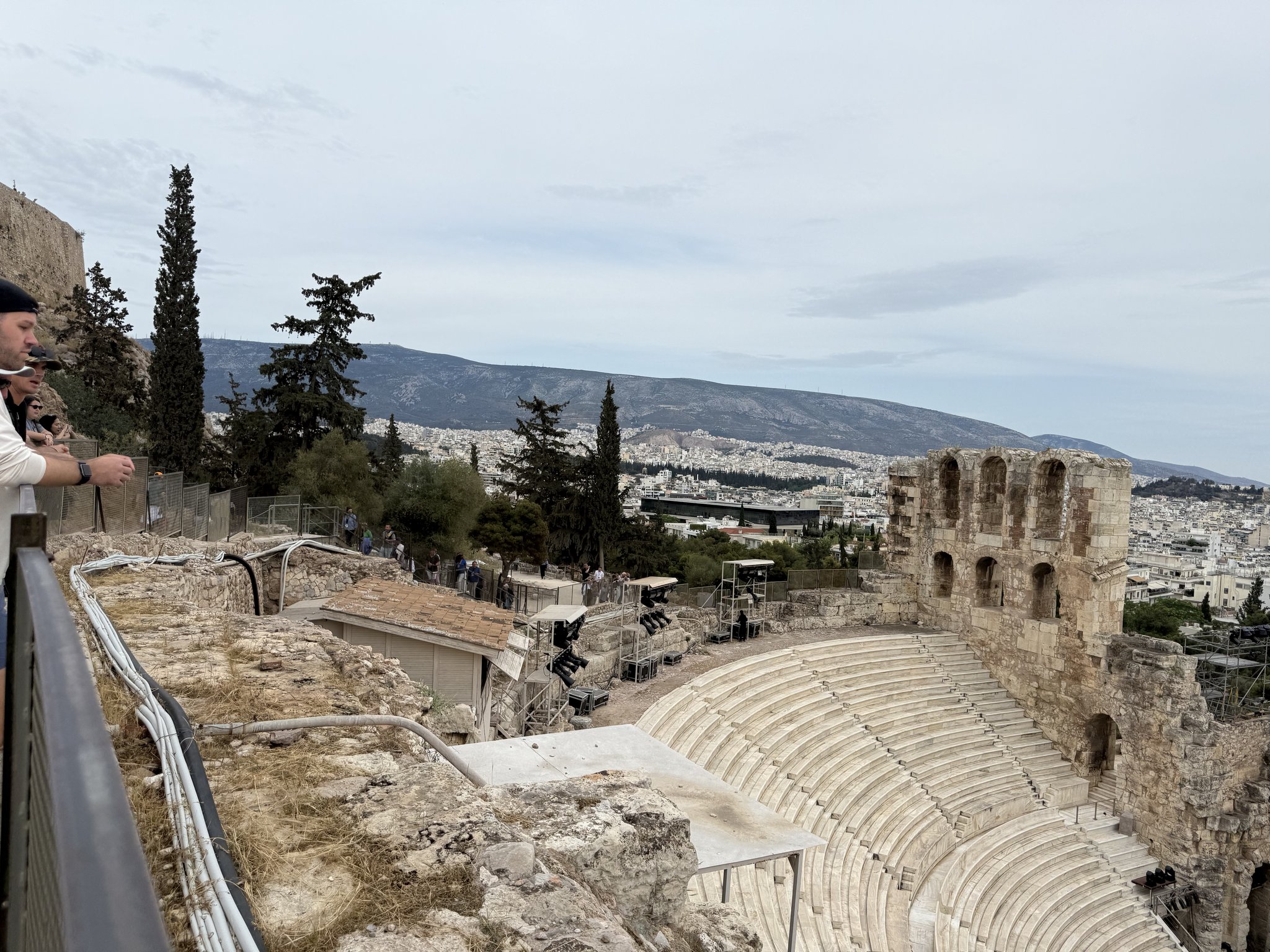
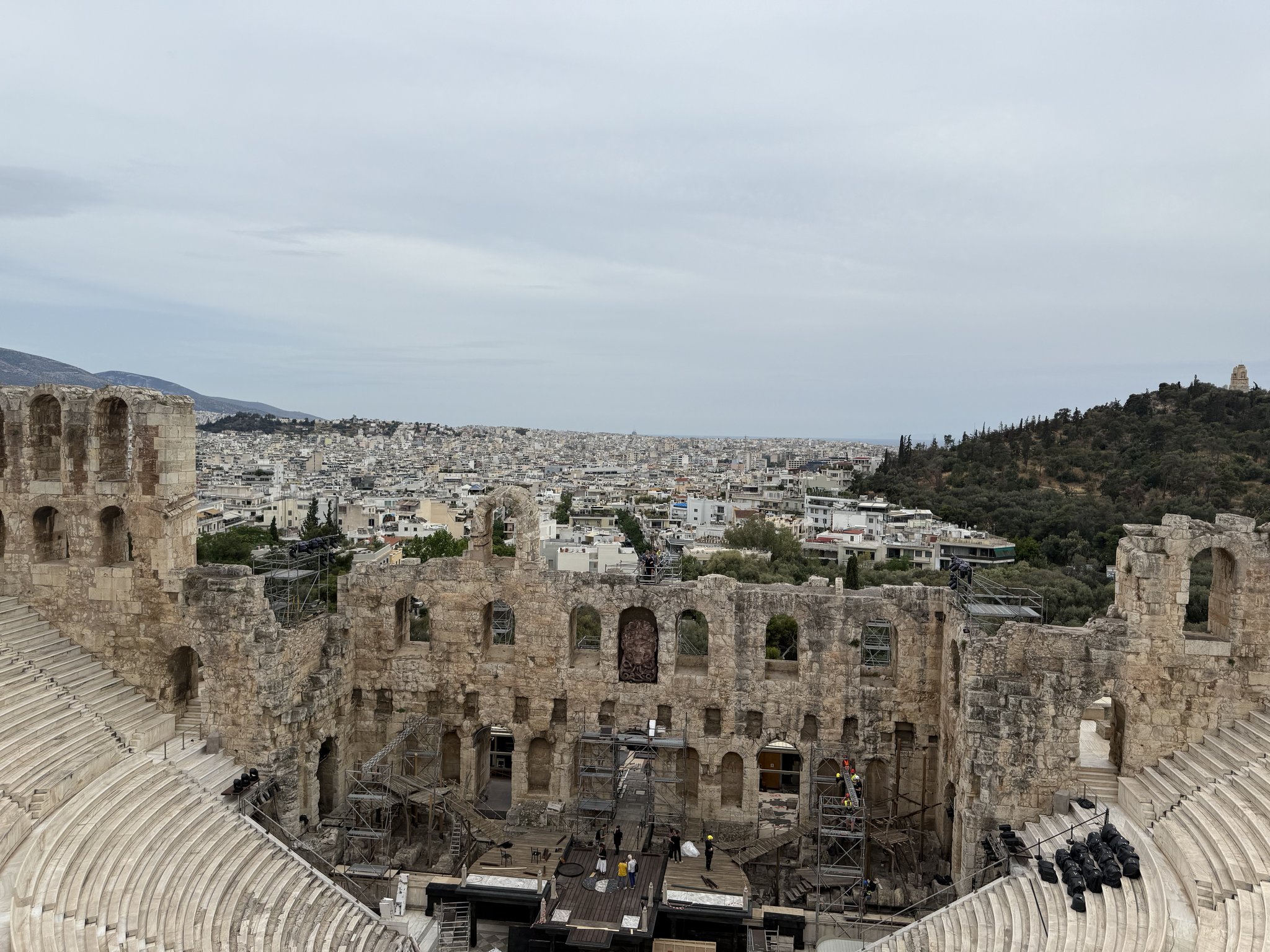
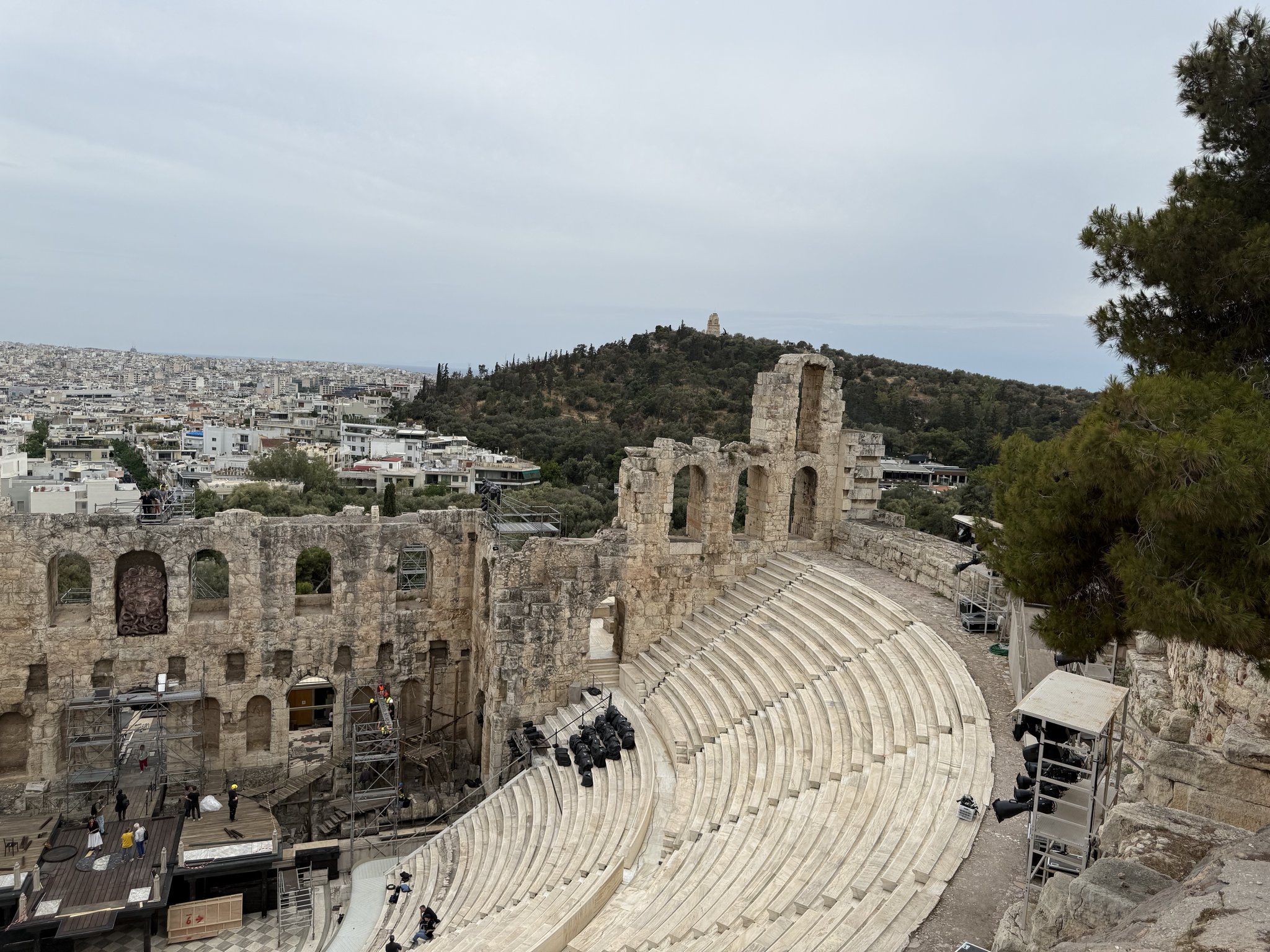
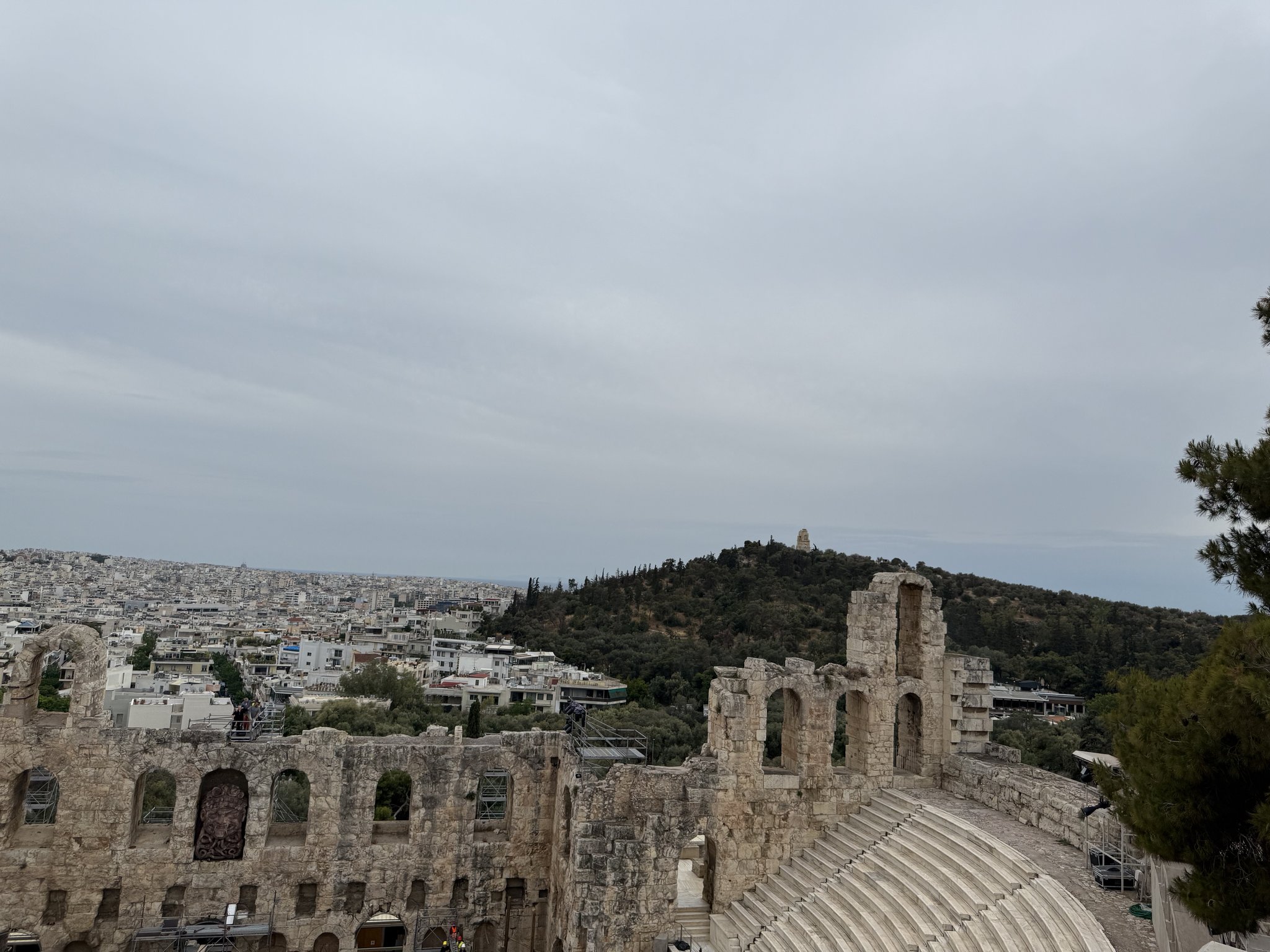
The Odeon of Herodes Atticus occupies the southwest slope of the rock, distinctly Roman beside the nearby Theatre of Dionysus. Herodes Atticus, an orator and benefactor, gave it to Athens in memory of his wife Regilla. Work ran from AD 160 to 174. A cedar roof once spanned the hall without intermediate supports, and Pausanias called it the finest building of its type. The Heruli burned it in AD 267.
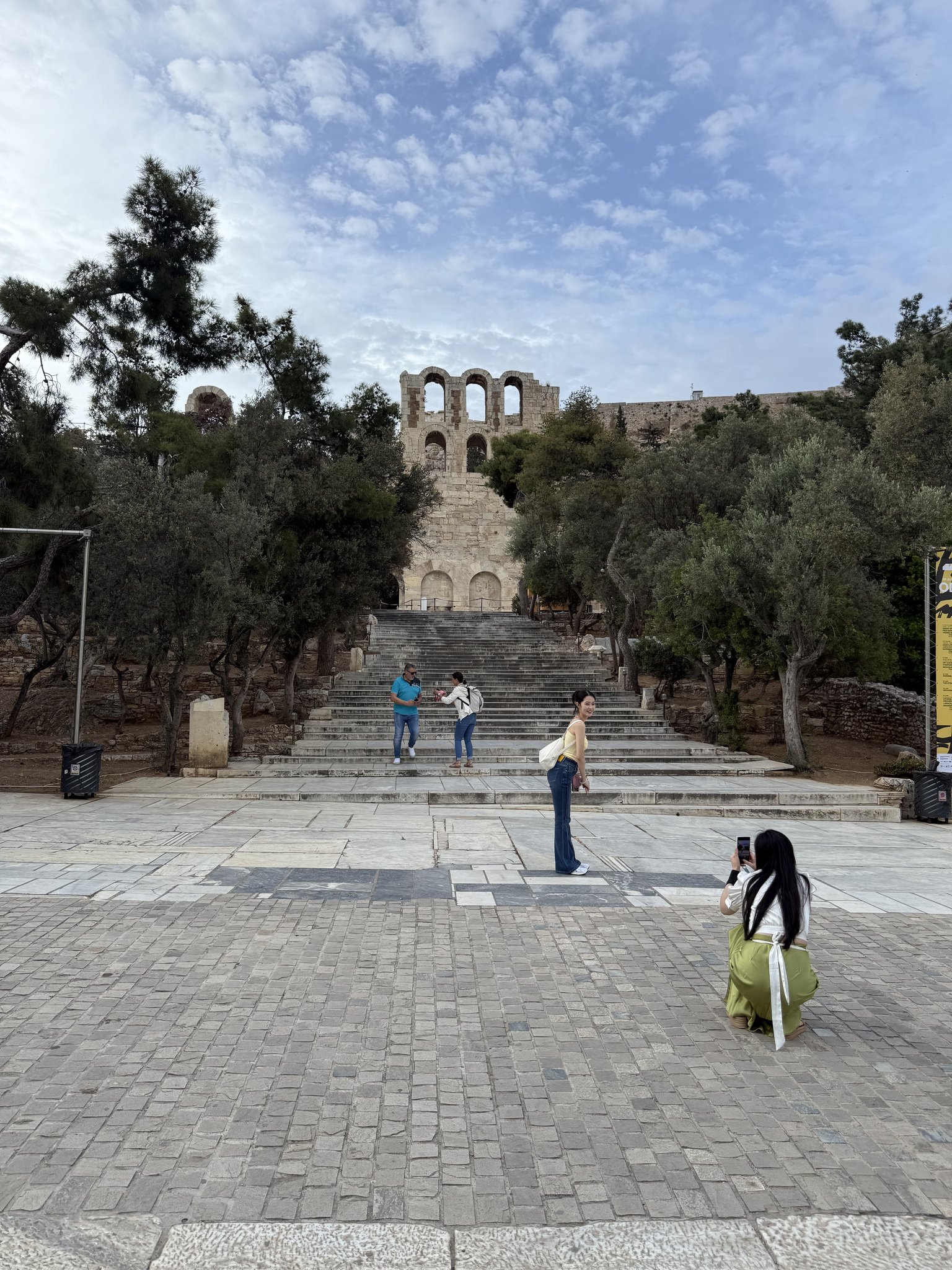
Wide stone steps climb from a paved forecourt to the arched stone facade of the ruined Roman theatre.
Acropolis, Athens
Pottery of the Neolithic period shows that the rocky hill was inhabited very early. Mycenaean builders walled the summit in the thirteenth century BC, and the citadel held a ruler's residence. The Persians plundered the Acropolis and burned its monuments in 480 BC. In the mid-fifth century BC Perikles launched the building programme that raised the Parthenon, the Propylaia, the Erechtheion and the temple of Athena Nike.
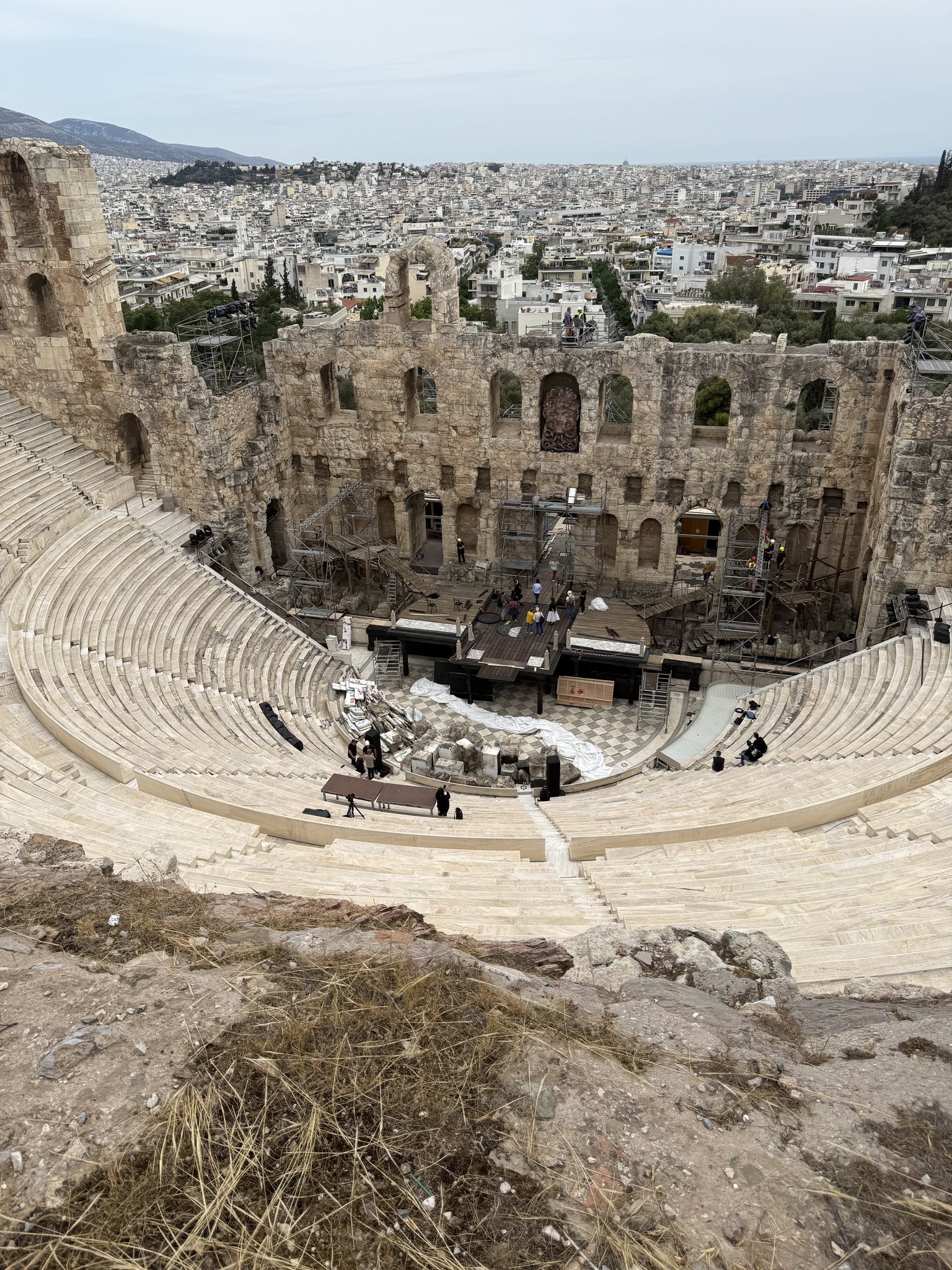
The curved tiers and the ruined multi-storey stage wall lie open, with crews setting up equipment on the stage and the city beyond.
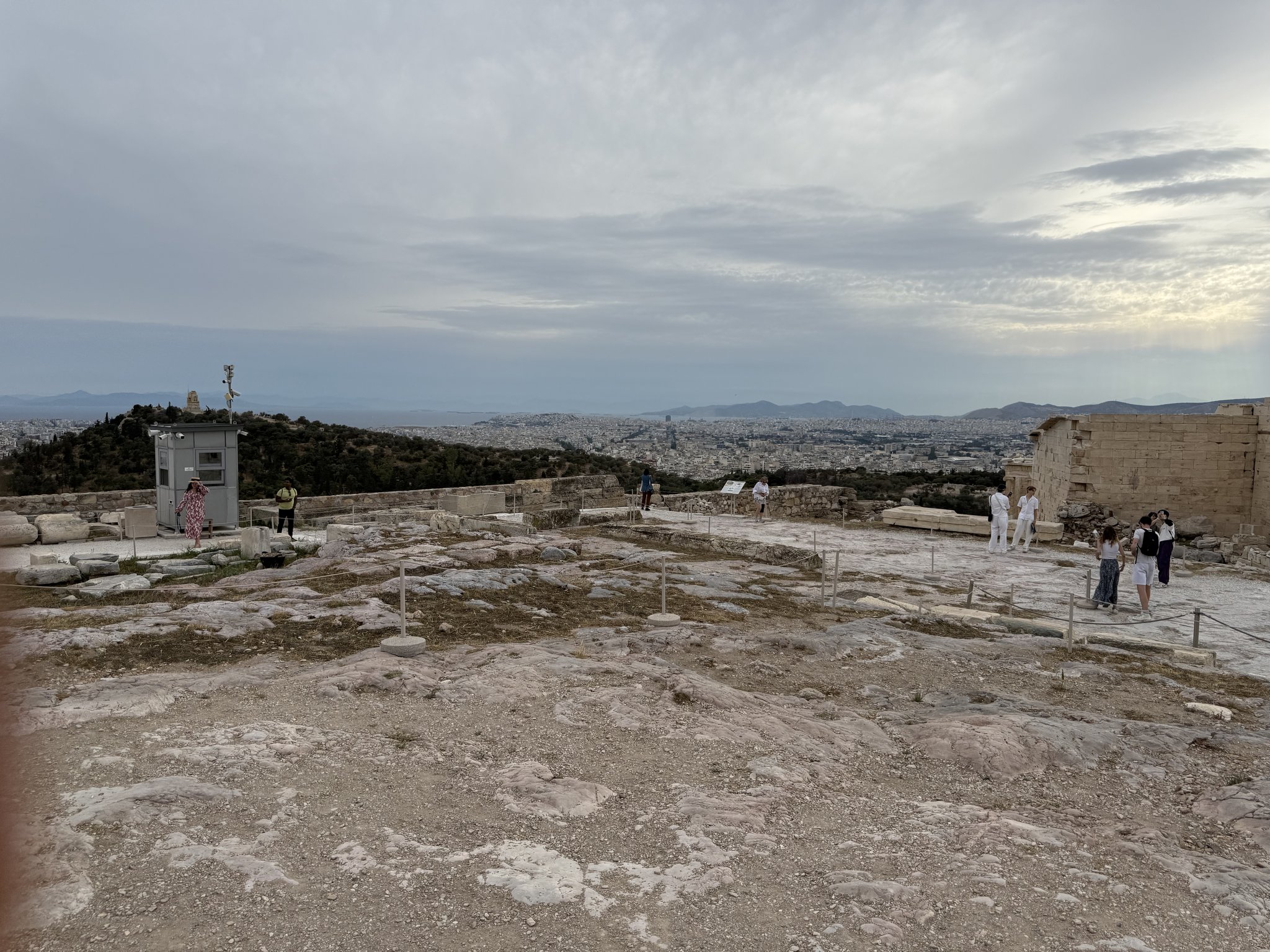
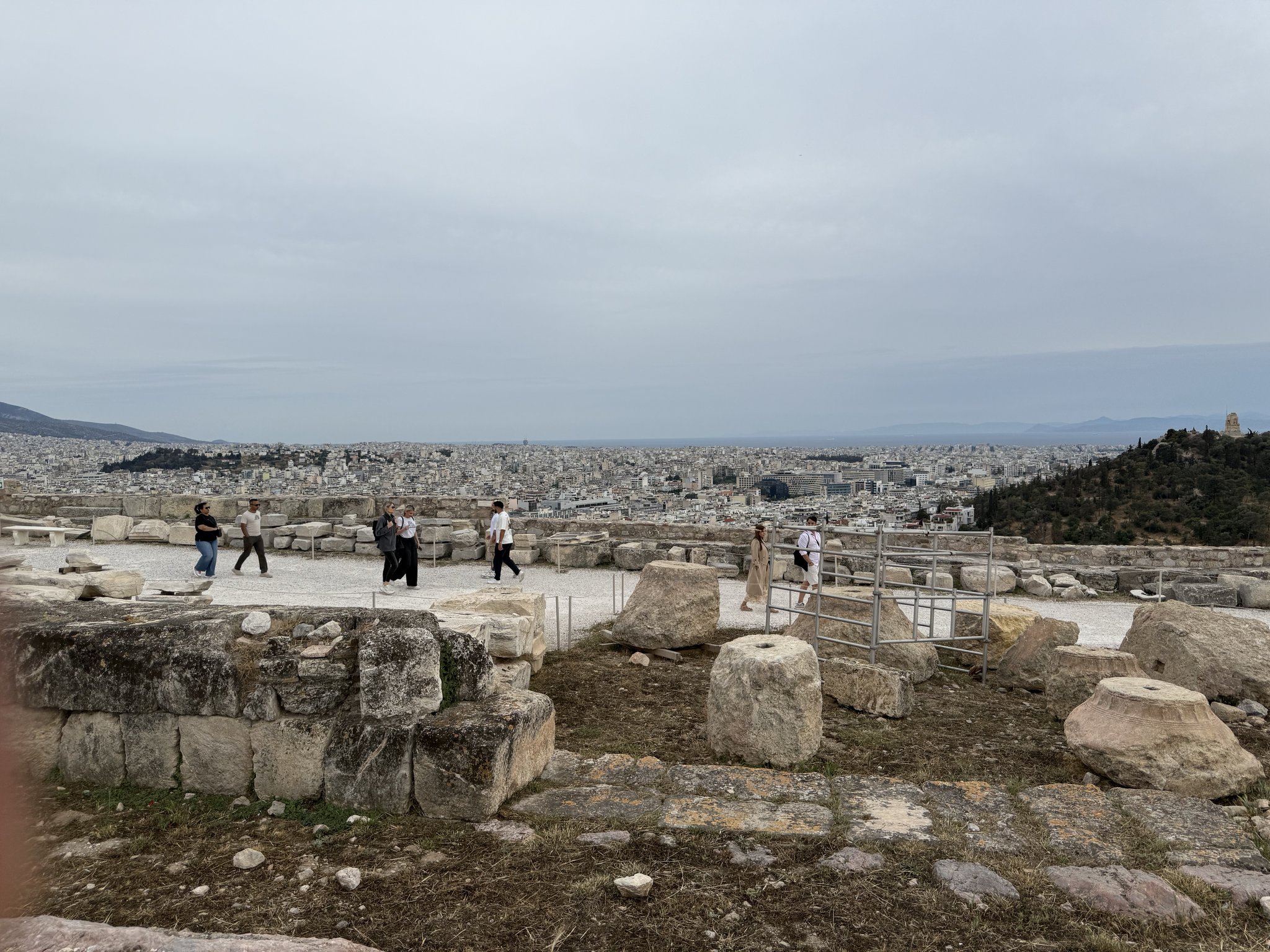
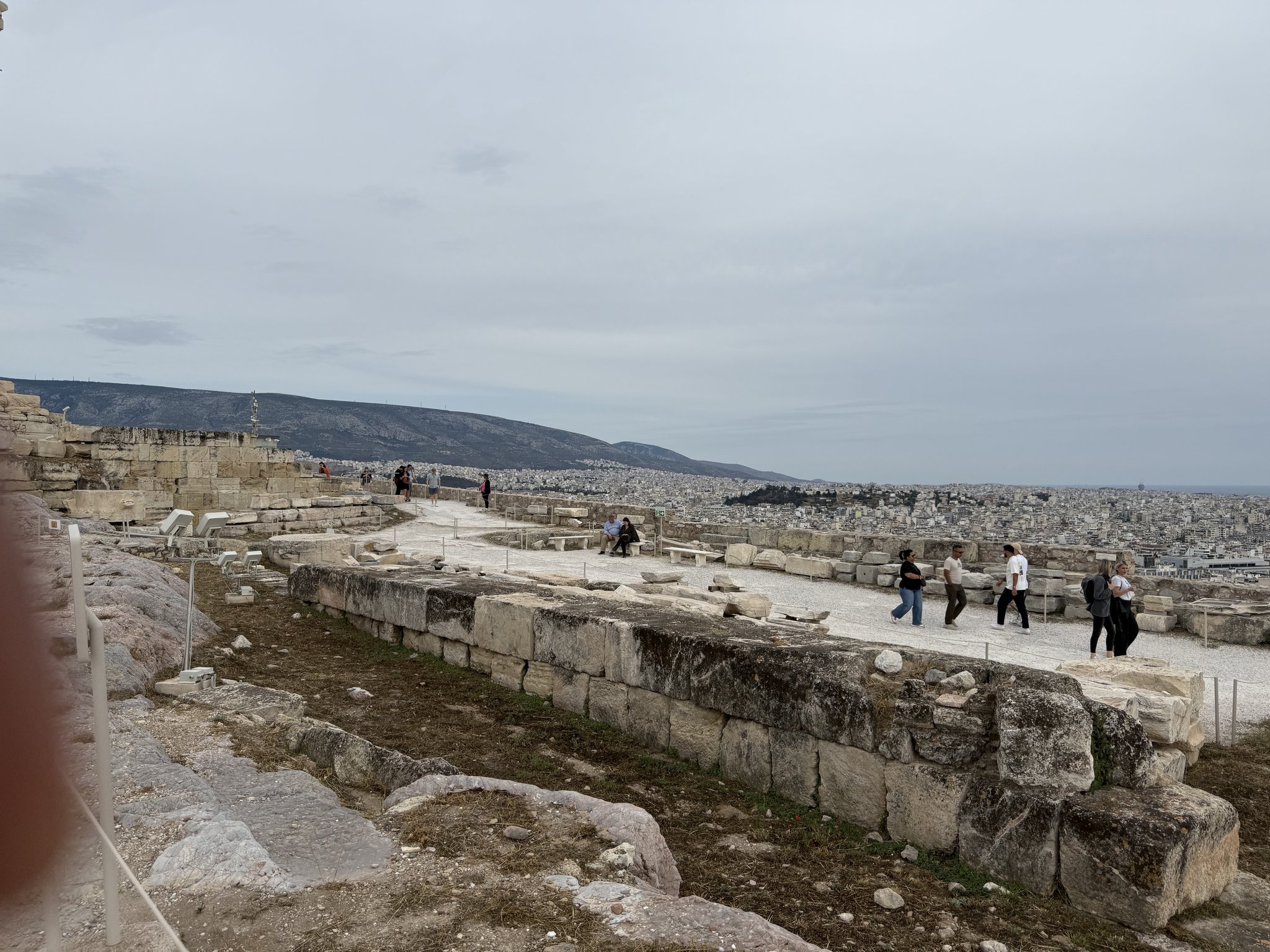
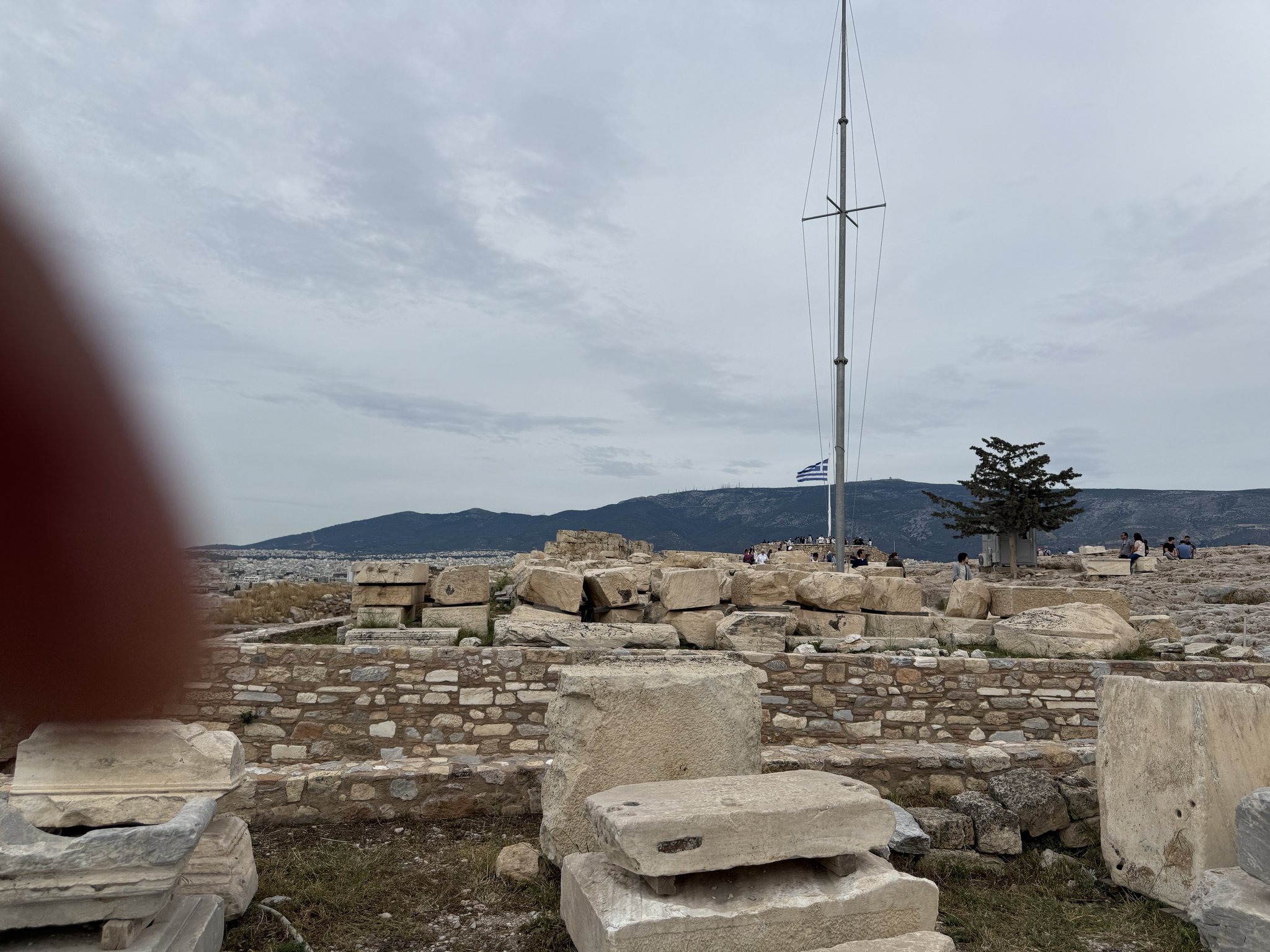
Low stone foundations and scattered blocks cover the hilltop, with a gravel path running between them and the city spreading out below.
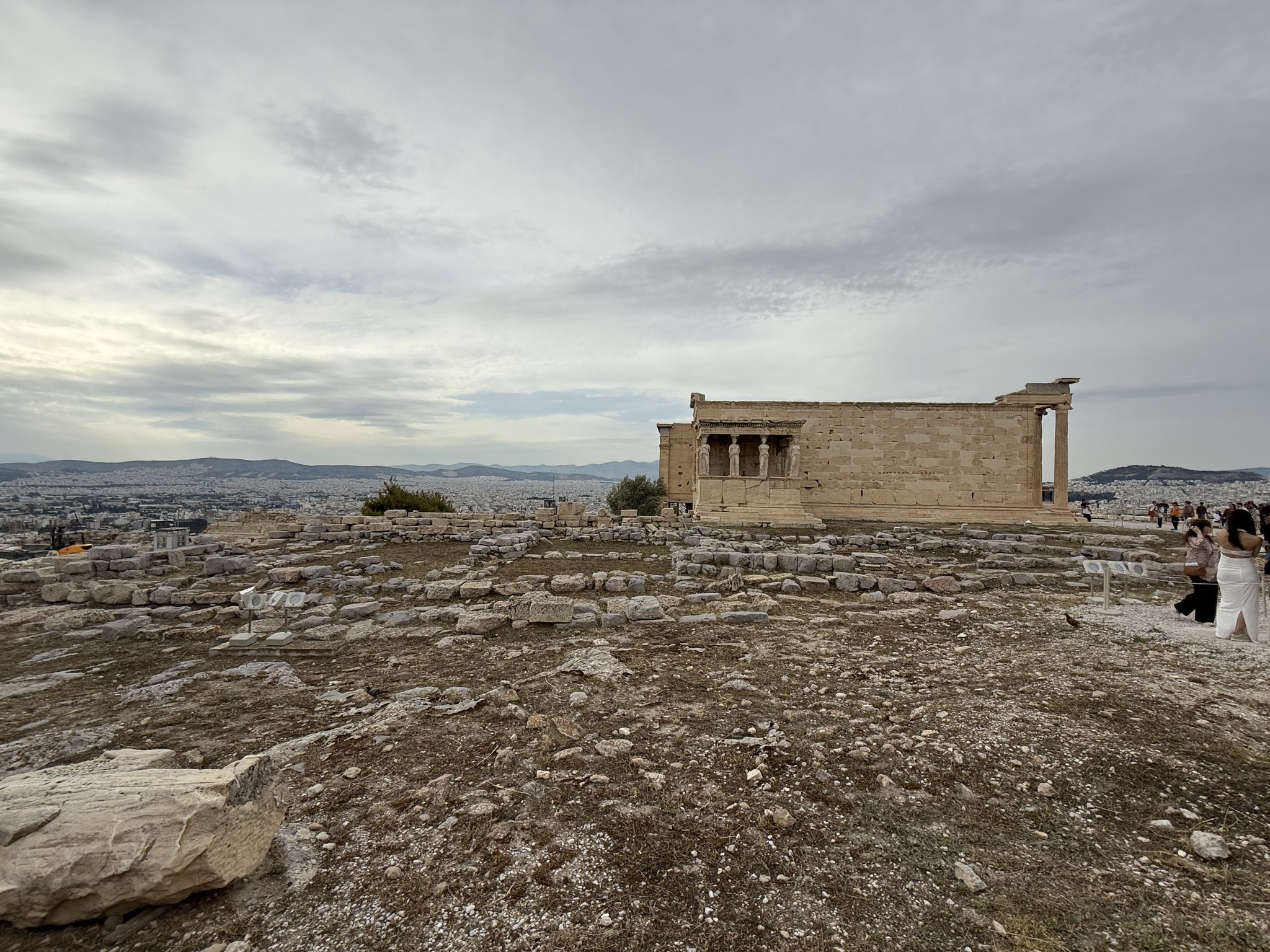
Across the bare rock stands the Erechtheion, with its porch of caryatids facing the open plateau and the city beyond.
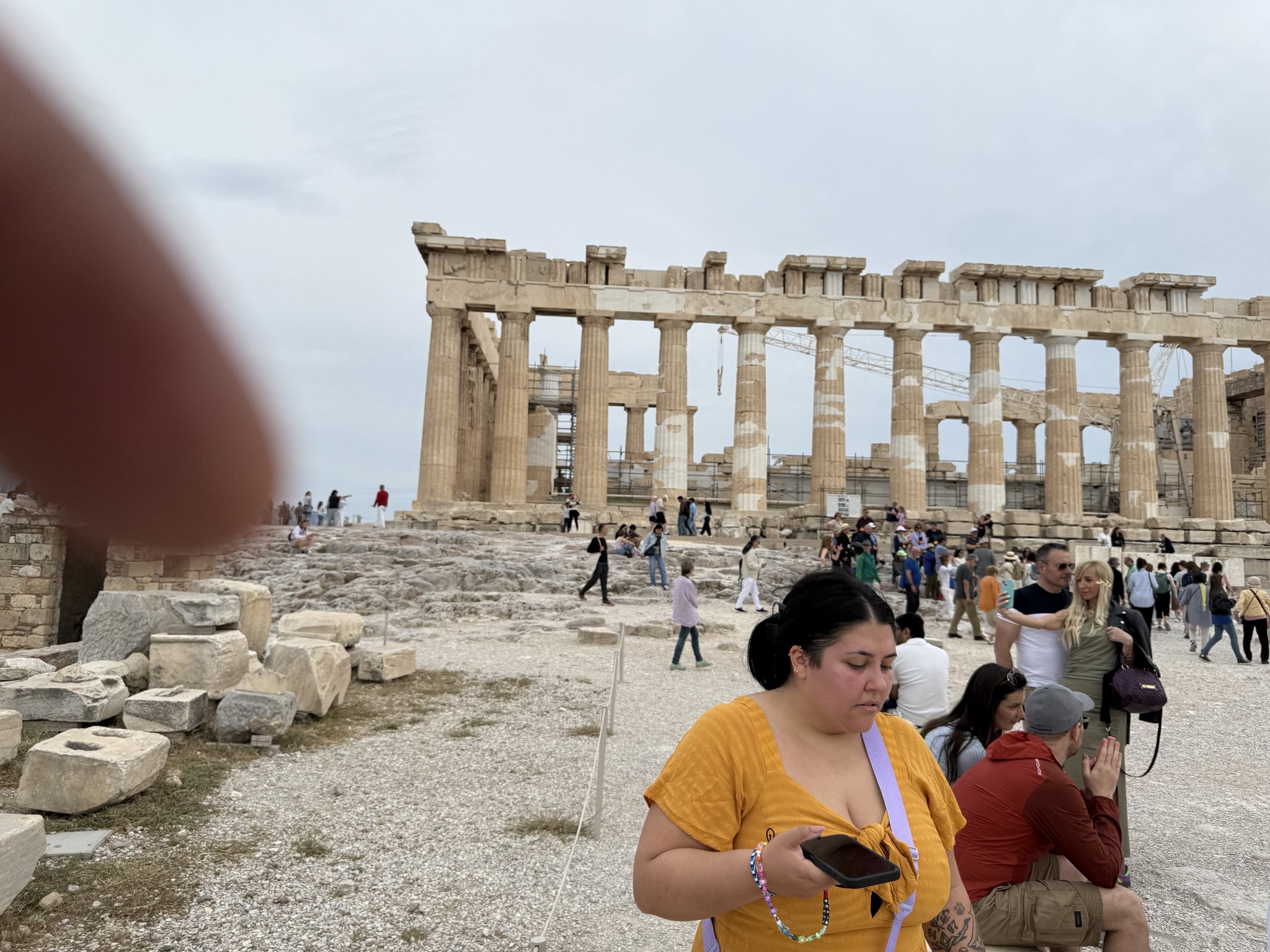
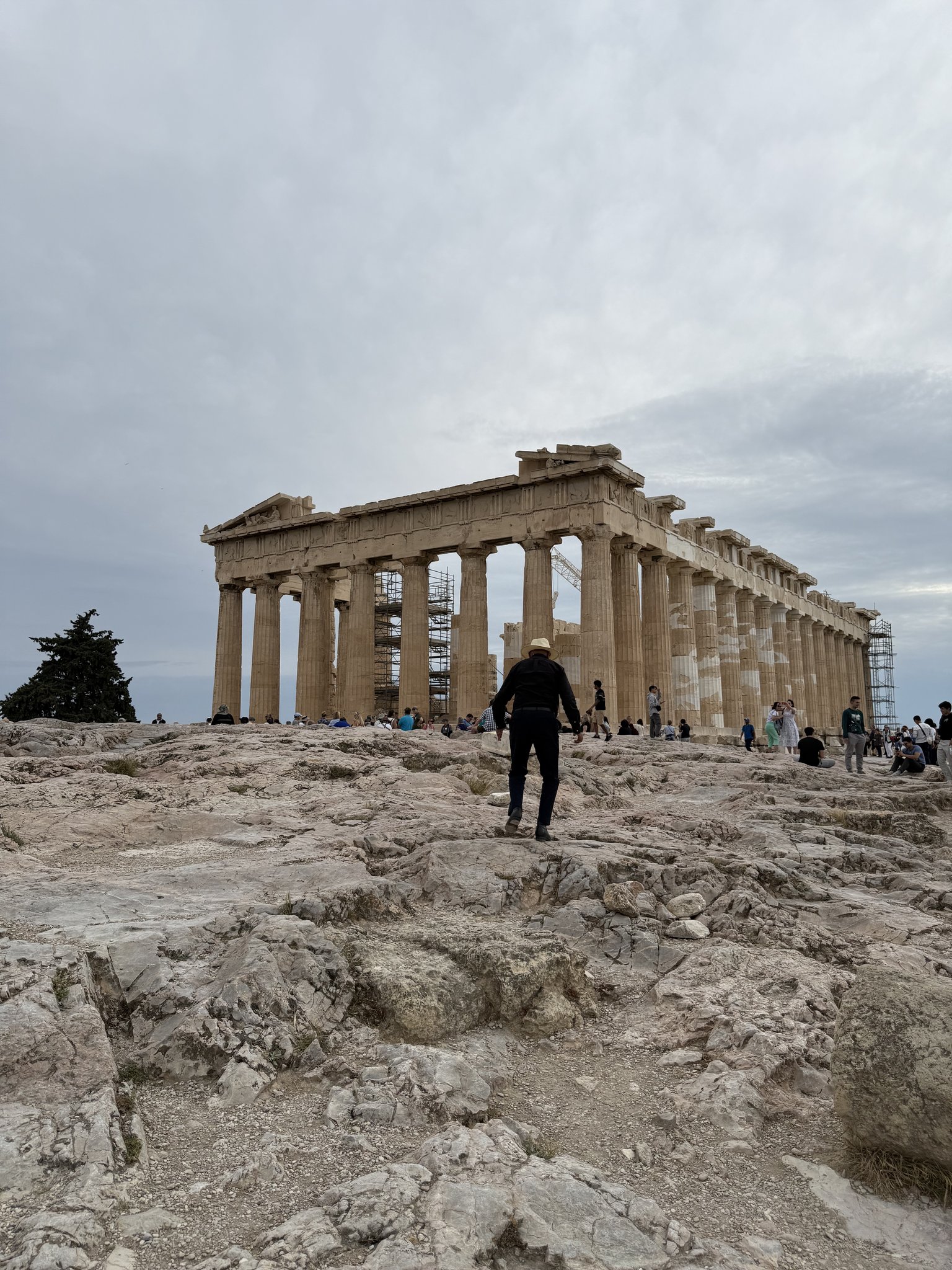
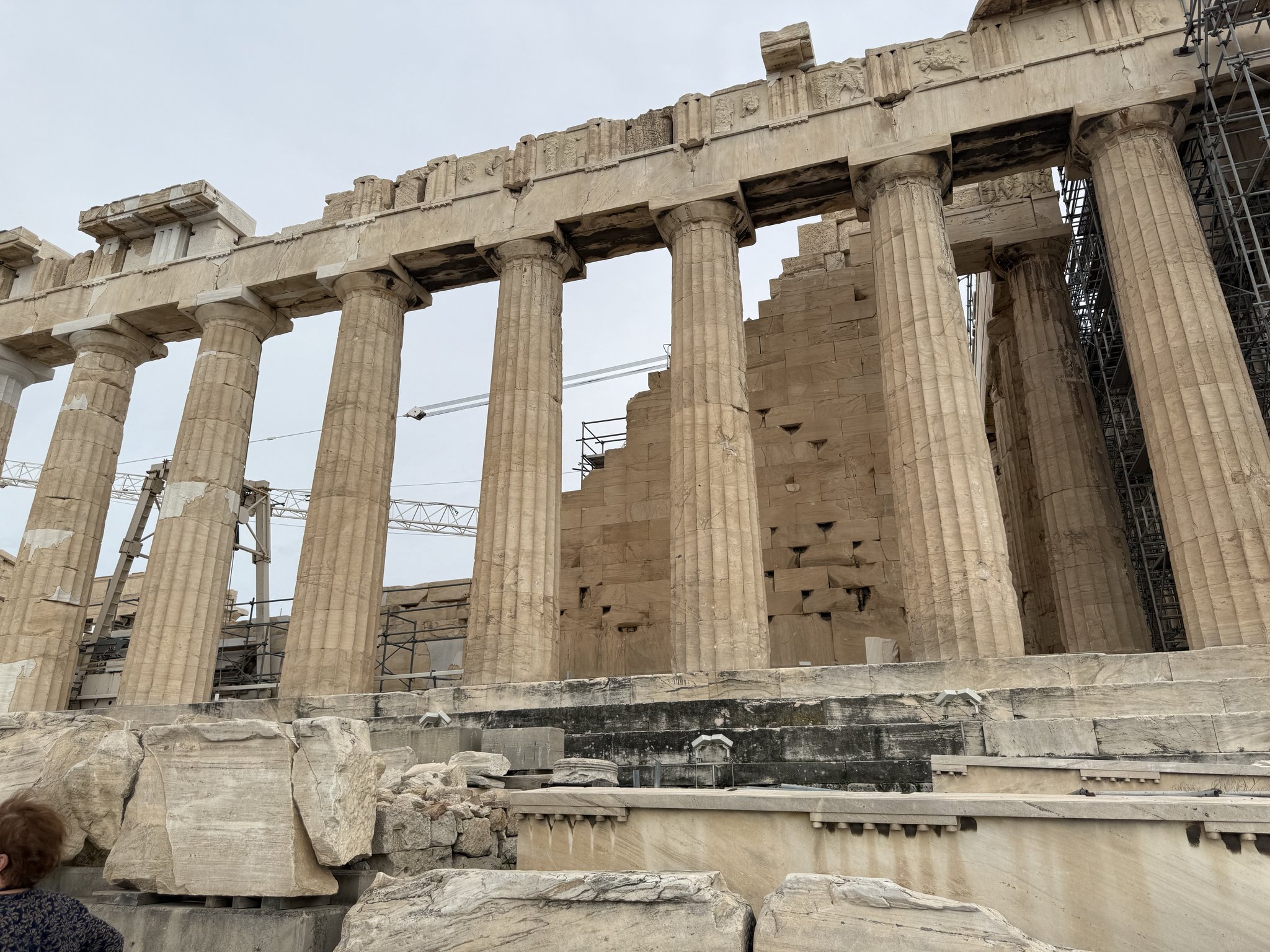
The Parthenon rises from the bare rock, with visitors scattered along its flank and one walking up towards it.
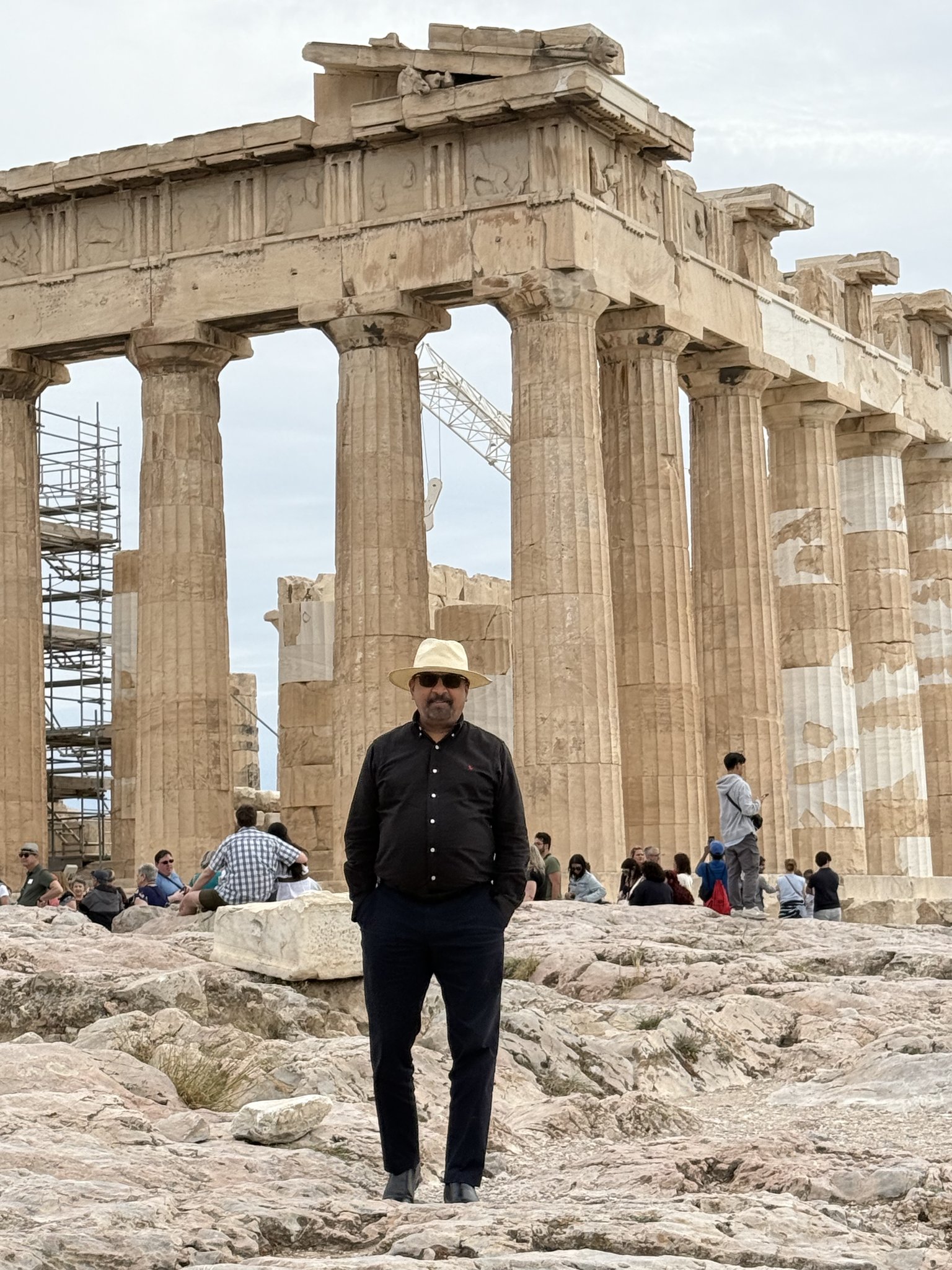
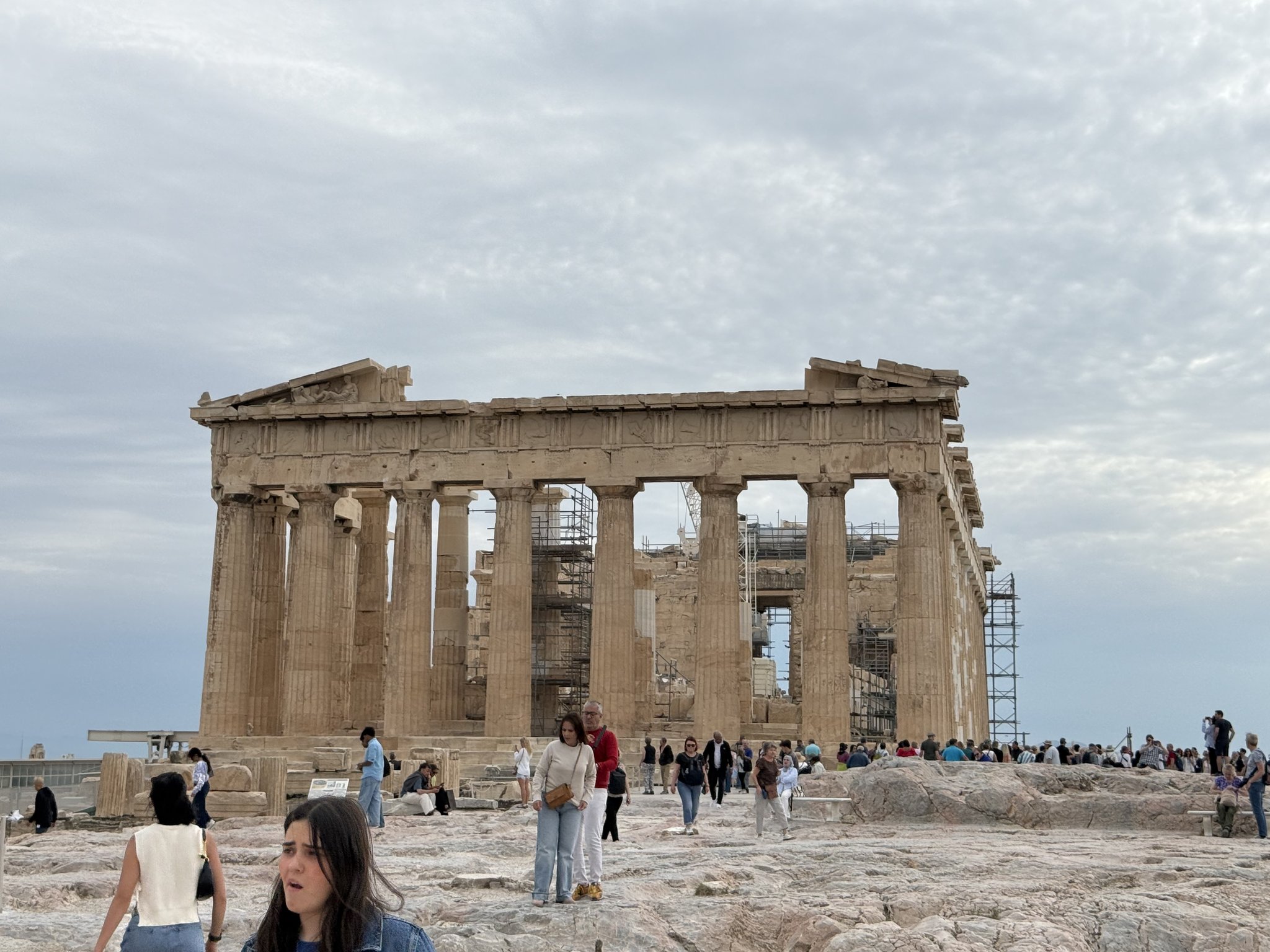
Scaffolding stands inside the colonnade of the Parthenon.
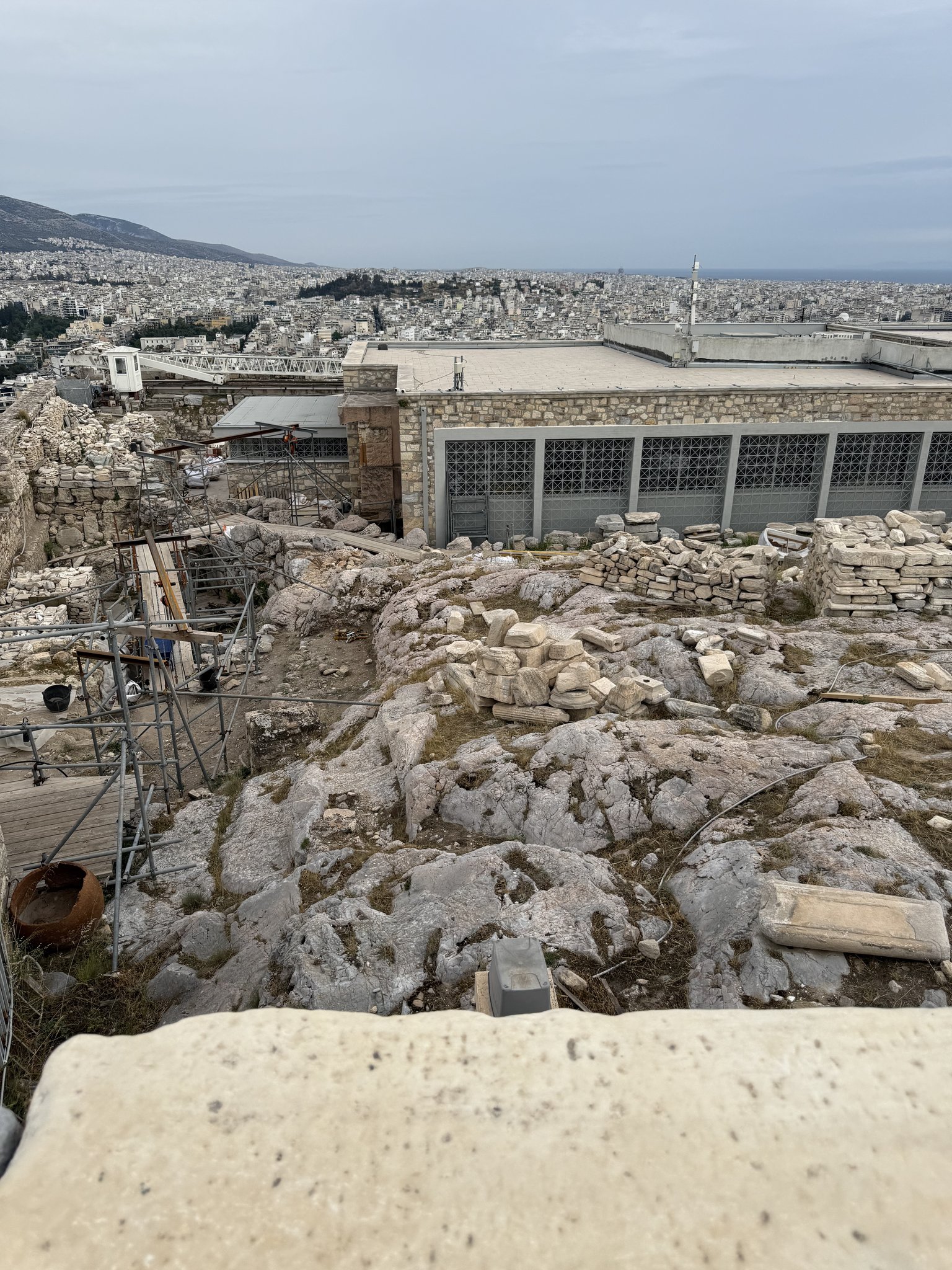
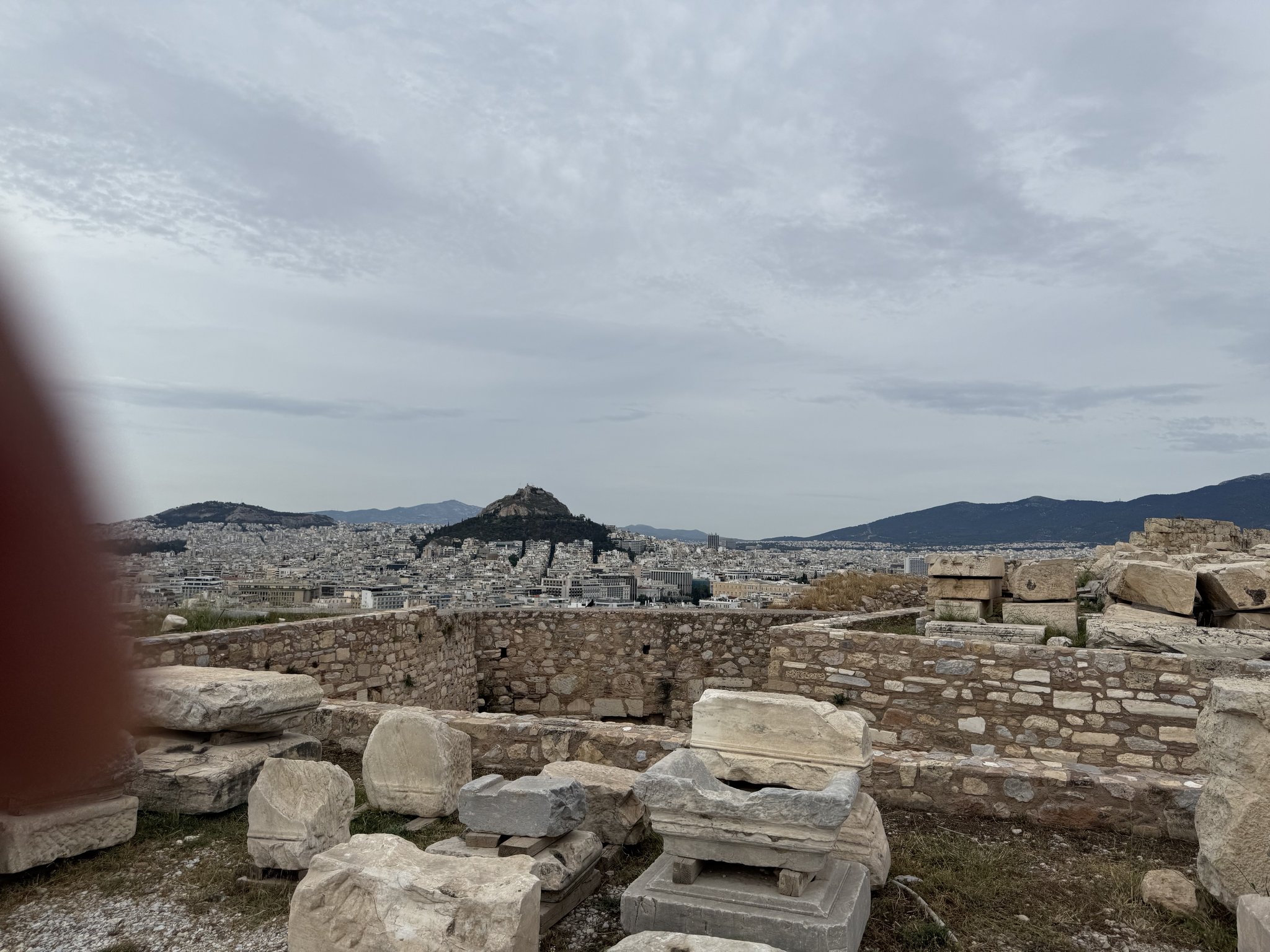
On the terrace, cut blocks are stacked beside a low stone service building, and the city runs away to the sea.
Acropolis Museum
The first Acropolis Museum stood on the rock itself, completed in 1874 and modestly enlarged in the 1950s. Later excavations yielded far more than it could hold. Bernard Tschumi, with the Greek architect Michael Photiadis, won the final competition for a replacement. The museum was founded in 2003 and opened to the public on 20 June 2009.
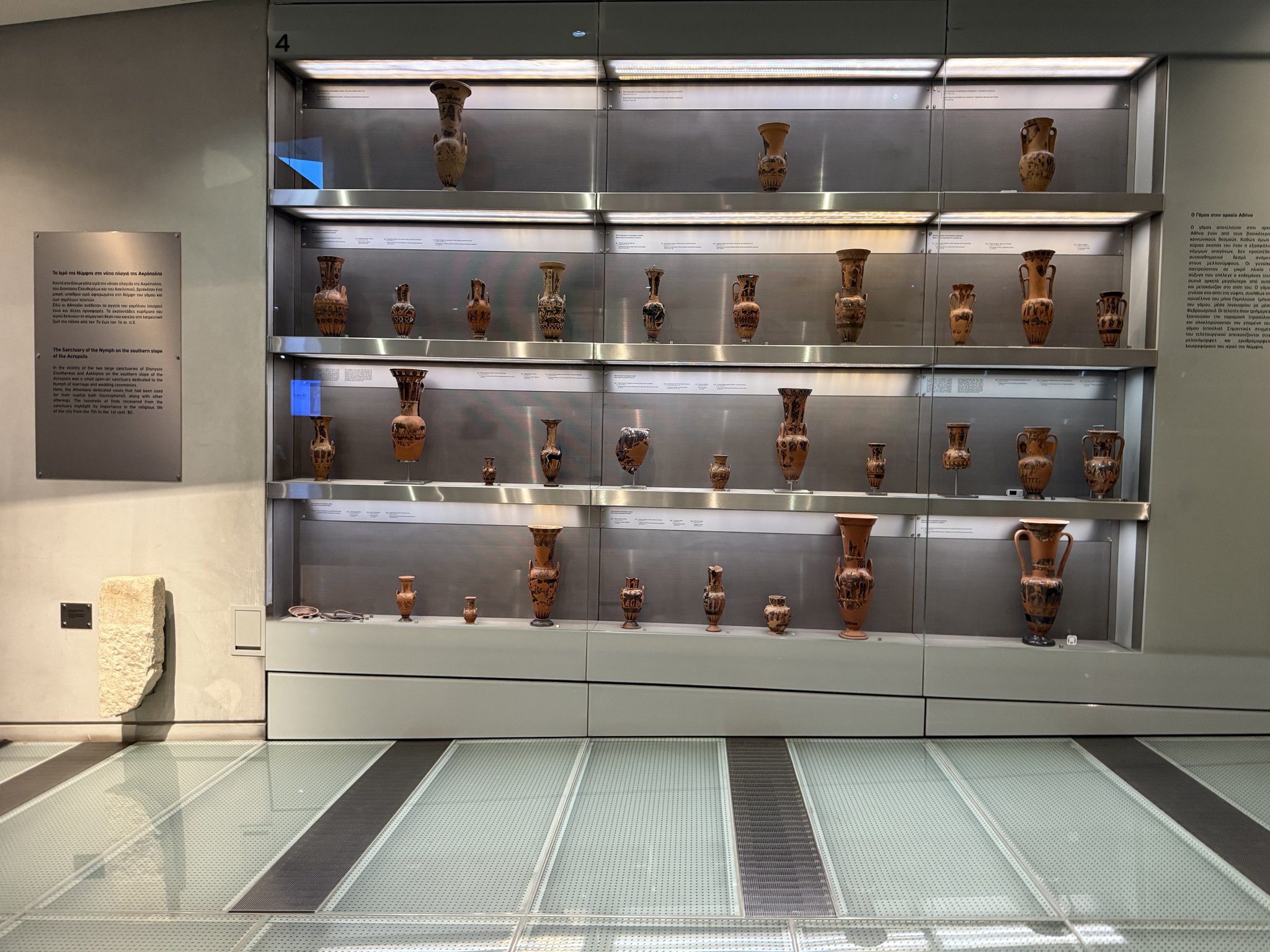
A tall case holds four shelves of painted ceramic vases, with text panels either side.
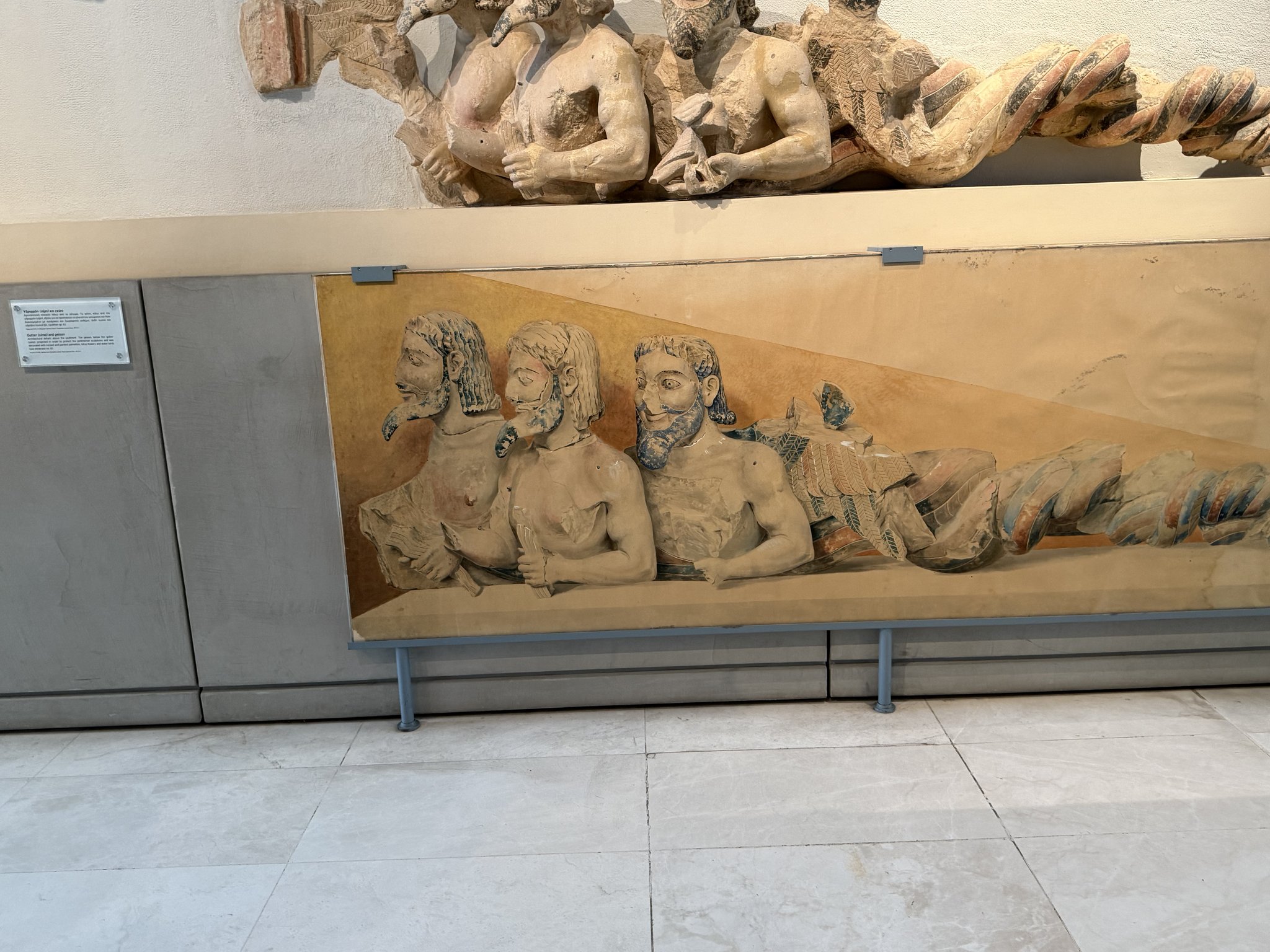
A limestone pediment sculpture shows three bearded male figures with coiling serpent tails, a reconstruction panel mounted below the original fragment.
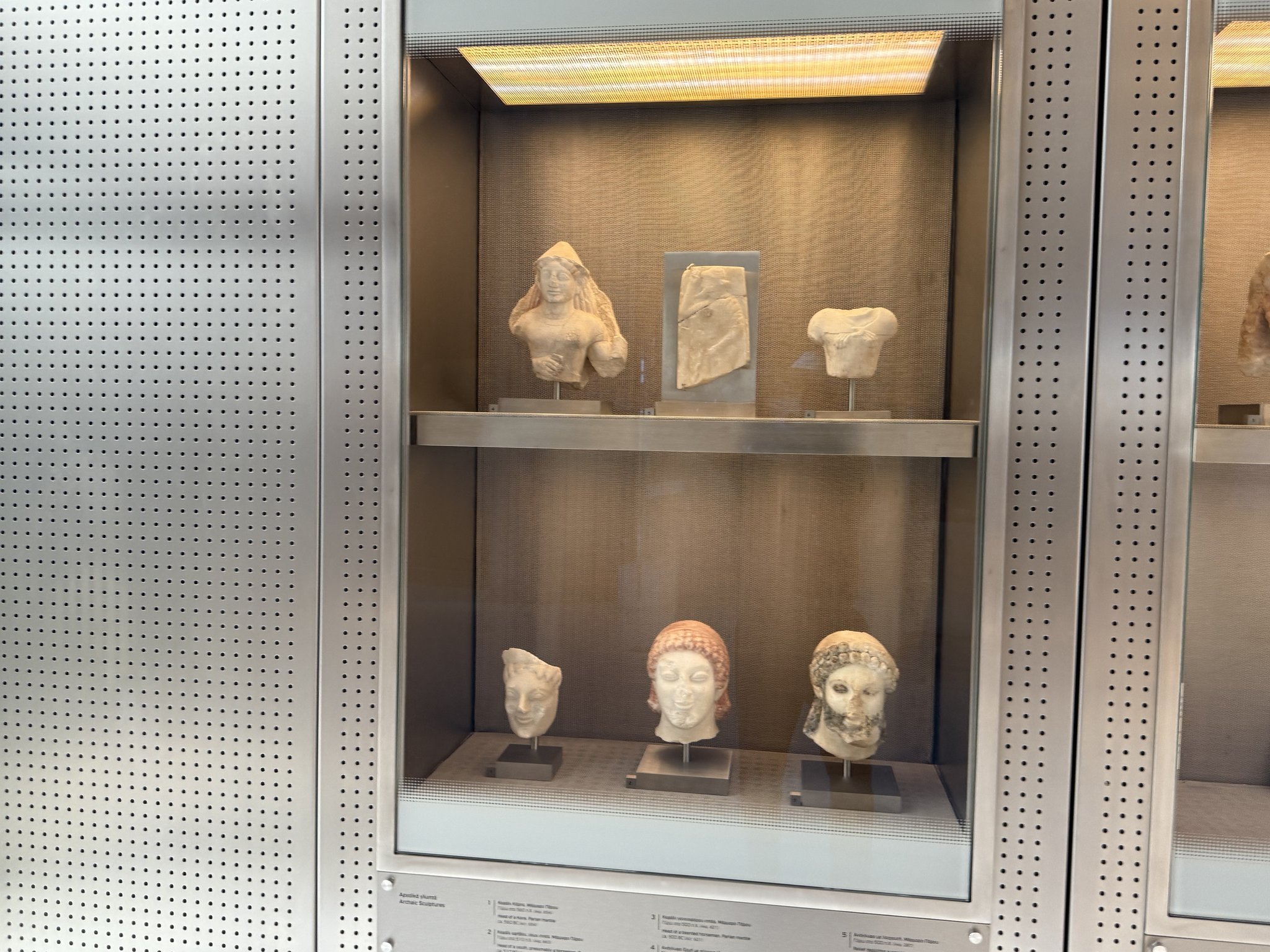
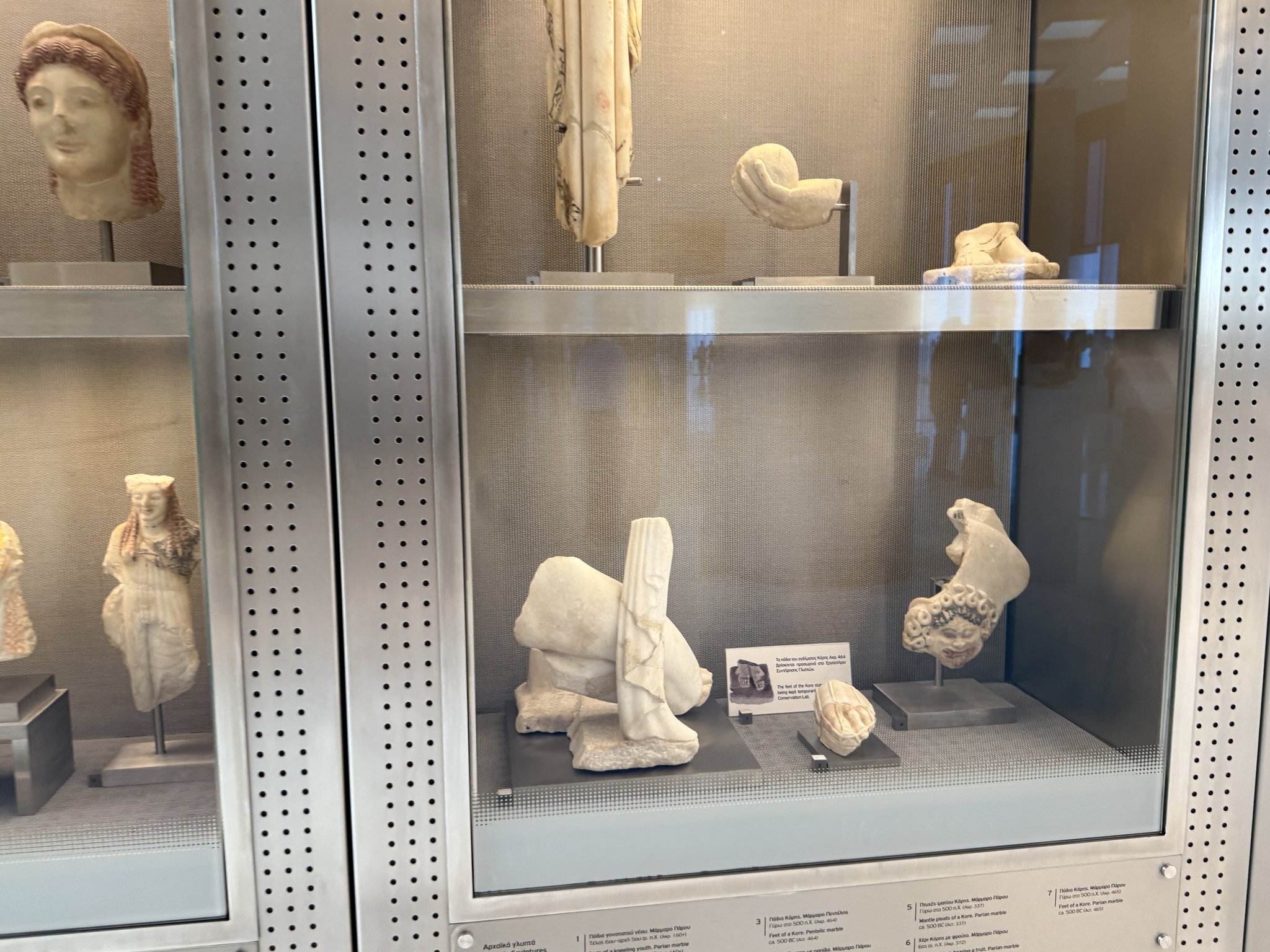
Behind glass are fragments of marble sculpture, among them a painted head, a draped figure and broken limbs.
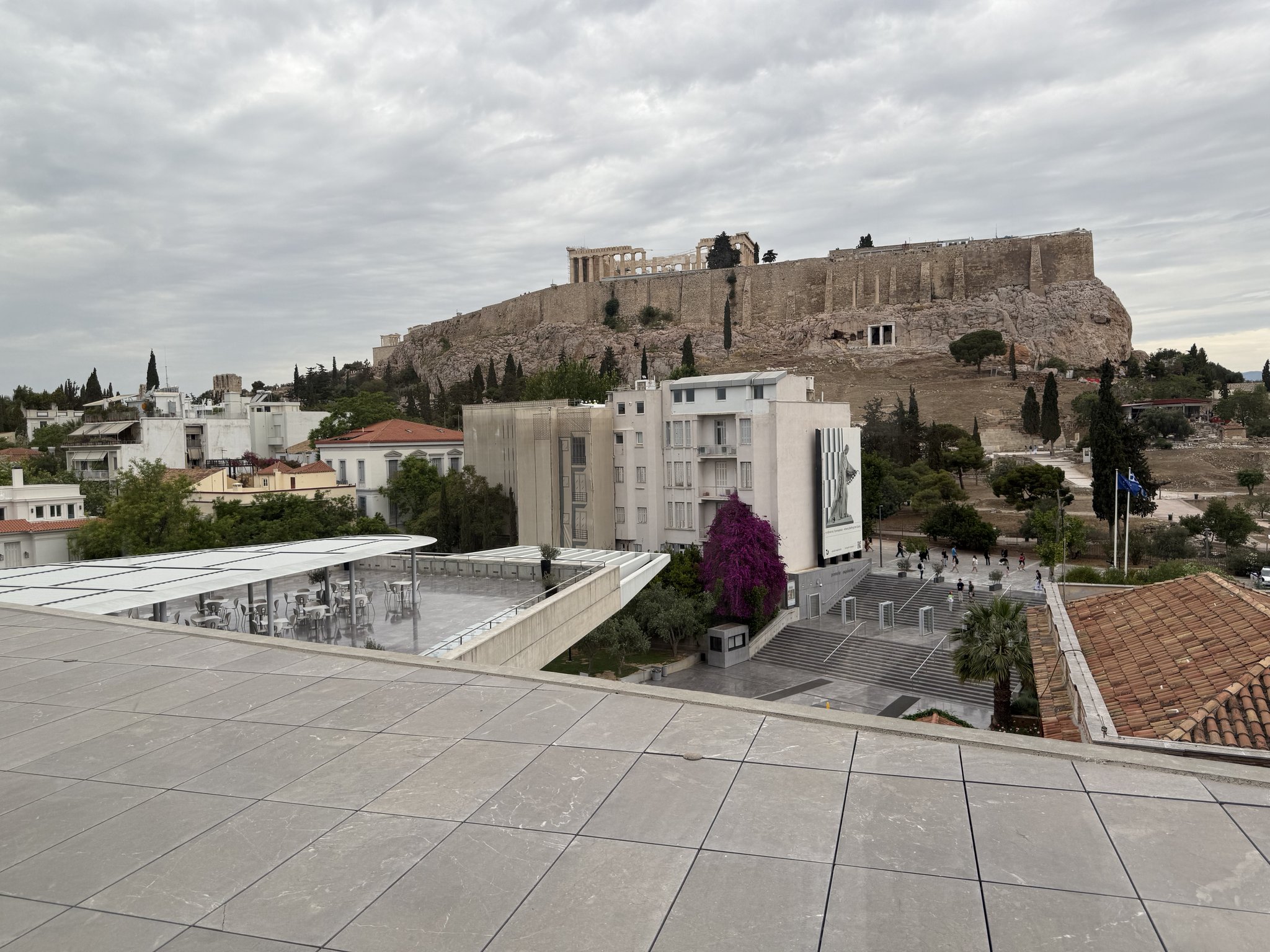
From the terrace the rock rises over apartment rooftops and a flowering tree, the Parthenon on its summit.
The odeon is to close after the June 2026 season for restoration planned to last at least three years. The paths across the summit remain uneven and rocky.
Sources
- Odeon of Herodes Atticus Tickets | 2026, retrieved 2026-10-22
- Odeon of Herodes Atticus - Athens Epidaurus Festival, retrieved 2026-10-19
- Herodes Atticus theatre in Athens, Greece, retrieved 2026-10-19
- Odeon of Herodes Atticus - Opening hours, price & location, retrieved 2026-10-22
- Odeon of Herodes Atticus - Madain Project (en), retrieved 2026-10-22
- Odeon of Herodes Atticus - Wikipedia, retrieved 2026-10-22
- Acropolis of Athens - Wikipedia, retrieved 2026-10-22
- Acropolis, Athens - UNESCO World Heritage Centre, retrieved 2026-10-22
- The Acropolis of Athens Guide For First Timers: Top Tips And What To Avoid, retrieved 2026-10-22
- Ministry of Culture and Sports | Acropolis of Athens, retrieved 2026-10-22
- Acropolis Museum - Wikipedia, retrieved 2026-10-01
- Acropolis Museum in Athens, Greece, retrieved 2026-10-22
- The Acropolis Museum | The Official Athens Guide, retrieved 2026-10-01
Comments
No comments yet. Be the first to write one.